Friday, 25 January 2019

ORPHEUS IN NORFOLK


He said ‘Hadestown’, my son,
And I pretended to have heard it wrong:
‘I’ve been there.
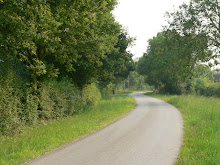
Got drunk in the Tavern overlooking the wild reeds
And the deceptive fens,
With their dark hoards, pike
And treacherous mud depths.
Tried to cycle home.
Fell off. Hurt myself.
Had to sleep in a barn.
As though of Lethe I had drunk.
It was cold.
I turned my duffel coat round for warmth.
Course,
When I woke up
I thought I was dead.
Black hood, you see’.
He looked at me like I was mad.
‘Haddiscoe.
Where Sebald went.
Not far from the sugar beet plant.
Mud. A rookery at Loddon, by the church
Where I sang as a visiting chorister
And afterwards was fed sandwiches and cake
By old ladies finding boys to tempt and spoil,
Ladies who ran the fetes.’
Aghast, he said, ‘Hades, Dad. Hades’.
‘Wasn’t that bad’, I said.

Tuesday, 8 January 2019

ZEN TODAY

Build an observatory of your own mind.

Wednesday, 19 December 2018

CHRISTMAS POEM

Poetry? He said.
It’s just lists.
Like kids leave Santa a list.
He has a point.
The apples
Humans say are rotting
On the south lawn,
But I left deliberately
And the thrushes and fieldfares
Treat as a drive thru
All winter,
The blackbird’s cantata,
The robins’ chorus,
The sparse blows of snow,
The frost painted onto every leaf,
The dark coming of Christmas,
The light of short days.
I thought of these as poem.
But, looking now,
Really, they’re just a list
I’m leaving, in hope.

Monday, 17 December 2018

LOGIC


Anger
Blame
Guilt
Shame.
These are the vehicles of our pain.


Let go anger
Let go blame
We become peaceful once again.


Let go guilt
Let go shame.
Feel the peaceful heart remain.

Sunday, 14 October 2018

THE EYES HAVE IT

I like people who look me in the eye.

I'm not alone. There is a deeply held human trust in eye to eye contact, and a primal distrust of avoiding such contact. I'd go as far as to say, when someone won't look you in the eye, you can be reasonably sure that they are wishing to cloak a dishonesty, or a harm they wish to do you. Linguistically, this gets recorded in such words as hoodwinking, obfuscation and misleading. They and others derive from an essential in all trickery - the need to divert what is seen.

It is said that torturers do not look their victims in the eye. I can understand that, for the whole history of  violence is a history of distance. Killing someone with my bare hands is not just dangerous for me physically, it will haunt me psychologically for the rest of my days. Using a stick distances me just that small few inches, a spear a few feet, a bullet, to the point where I can perhaps pretend I didn't do it. At least, not looking you in the eye as I kill you, I can dehumanise you. You are no longer Gunther Weil, 23, of Hamburg Germany, fond of bicycling and with Esthe, your girlfriend, looking forward to a potentially happy life with children and a vegetable plot (just like me). You are the enemy. I'm not murdering Gunther Weil. I'm eliminating an enemy. When people in normal life take steps to dehumanise you, you can be certain they mean you harm.

The opposite is also true. When people meet eye to eye, simple use of the truth becomes almost inevitable. People see, and cannot help sharing their common humanity. I remember hearing from a former Royal Marine who had served in the Falklands War. As he described taking from the horribly contorted bodies of dead young Argentinians the family photos they had in their wallets, he found it impossible to continue without sobbing. "At that moment, and ever since," he said, "I've found it impossible to see them as my enemy."

In the trenches of the First World War, hostilities ceased on Christmas day, and, famously, opposing troops went into no man's land, played a game of football, shook hands and wished each other happy Christmas. What happened afterwards is telling. Orders were issued to all soldiers warning them that fraternising (meaning, of course behaving in a brotherly way) with the enemy would result in a Court Martial. If you are waging a war, you can't have people getting to know their enemy. If they do, enmity itself will fragment and die.

In less dramatic circumstances, I came across an example recently. About to catch a Ryanair flight, I had failed to check in online. Never mind, I thought. I'll just check in at the airport. Going to the normal baggage drop, the agent looked me up on the flight manifest and wrote me out a paper form. In the same time and with the same effort, he could have written me a boarding pass. But he didn't. At no point would he look me in the eye What he wrote was a form I needed to take to another desk. I did so and handed it to the young woman behind the counter, who also determinedly avoided any eye contact. "That will be 100 Euros," she said, staring at her computer. Now, having flown with Ryanair before, I realised there would be some charge or other, but this one floored me. I stayed calm, and asked the lady what she felt about that. She began to give me the official line - "if you look its in the terms and conditions......" I stopped her. "That's not what I asked you. I asked you how you felt about it." She went on by explaining "it  wasn't her fault but was Company policy." I persisted. "I'm not asking you about the policy. I'm not saying it's your fault, I'm just asking you as one human being to another how you feel about it." At this point, she did look at me. I was surprised to see her eyes moist with tears. "As a matter of fact, I feel awful about it every day," she said. I thanked her. We had met.

When we meet eye to eye, injustice is unlikely. Simple truth and fellow feeling will prevail. The dehumanising organisation, the twisting of the generous human spirit, the reduction of the other to enemy, appellant, respondent, offender, non compliant checker in in person, or any other form of anonymous objectification for the purposes of some form of violence - that will cease. Human shall meet human. Peaceful, kind human shall speak to peaceful kind human. In the eyes of the other I see myself. In my eyes, they see themselves. In a gaze, our common humanity is reflected and honoured.


Wednesday, 21 February 2018

THE UNKINDEST CUT?

Isn't it strange that, when female genital mutilation is widely outlawed and reviled in the UK, male genital mutilation continues without a murmur?

Saturday, 3 February 2018

TIMING

Timing is everything.

Take, for example, the father of one of a number of young women abused by a gymnastics doctor.

Attending the trial of the abuser, the Father asks the Judge for five minutes in a locked room with the perpetrator. The Judge of course refuses. One minute, then, asks the Father. Again, the Judge begins to refuse. The Father lunges forward with a view to attacking the defendant. Deputies quickly grab him, before any harm is done. He is wrestled to the ground, cuffed and led away. I expect he will not be charged, though it's a possibility. When he returns home and perhaps goes to his local bar for a drink, people will gather round and clap him on the back, perhaps buy him a beer. "I'd have done the same myself," they'll say.

But I think the moment of sentencing is an odd time to choose.

Were my daughter to make an honest accusation of abuse, it is possible to imagine I might quickly find myself in a private confrontation with the accused, well before any legal proceedings. A confrontation which might quickly escalate, with the accused man becoming angry enough to threaten me, or even attempt to assault me. Acting therefore purely in self defence, the sharpened machete I happen to have with me would be a natural weapon to deploy.

With nothing other than reasonable force, of course.

No one would congratulate me for that.

But then, I don't often go to bars anyway.

ME TOO

I've looked at news of a number of stars revealing their horrible experiences of sexual coercion and abuse. As the hashtag me too movement gathers pace, more emerge. The perpetrators involved are being named, shamed, and in some cases, criminally punished. But to me it seems we are missing a trick.

The celebrities who are victims of these attacks have nevertheless gone on to success and prominence. That's why they have our attention about their abuse. The trick we are missing is asking these people, "how did you deal with this horrible experience, put it in its place and still go on to success?"

Of course it is right that awareness is raised in order to diminish this particular horrible behaviour. But life will never be free of adversity, and successful people are those who can deal with it, move on and still build their dreams and aspirations into realities.

Mining these skills, understanding them, and passing them on is the real trick. And we're missing it.

Thursday, 25 January 2018

CELLULOID

I've never tried writing film reviews before. These will hardly qualify. But the weather is cold and uninviting, the nights dark early, and tis the season for seeing movies.

THREE BILLBOARDS OUTSIDE EBBING, MISSOURI,

Recommended.

A film about anger. I don't know if the Director knew the Buddhist quote, that anger is a hot coal. Pick it up and throw it at your enemy. Maybe you will burn your enemy. But you will certainly burn yourself.

Bravura acting, a great message, a plot which keeps you awake. And upliftingly unlike most Hollywood movies.


DARKEST HOUR

Gary Oldman plays Churchill.

Imagine Hollywood as a great circus of people who started off life in school plays.

Now imagine they are still at that standard, only doing their stuff on a big screen near you.

Cobblers, really.


I, DANIEL BLAKE

Seen on DVD.

Ken Loach trowels on heaps of anti capitalist, anti conservative, anti system drama. And slaps it on very heavy duty. Daniel Blake, well acted, is a man of skills and dignity facing a Kafkaesque version of the benefits system with all its inhumanity to man. Trouble is, his desperation doesn't quite wash. he makes beautiful things from wood. Why doesnt he just sell them? He'd make a small fortune.

It's wooden, this film. Like all propoganda.


EVEREST

Netflix.

Quite a climb. I didn't make the summit, and only just made it back, revived by a hot apple juice and a biscuit. Not sure it was worth it.

Still, I fared better than most.

All those actors dying. A shocking waste. But Pierce Brosnan came out ok.

Nice views of mountains though.


Monday, 22 January 2018

BUST

The demise of Carillion threatens jobs and the completion of a number of major public contracts.

It also raises questions about how to pay for public works.

The left bang on about "taking it back in house", whatever that means.

More nuanced observers recognise that when a string of public / private contracts go wrong, you can't simply lay all the blame at the door of the contractor. Moreover, in huge, decade long contracts, there has to be some reciprocity in the risk. Major builders are now refusing to take fixed price contracts from government for that very reason.

I had my own mini experience of this when I wanted to get some barns converted. The builder,who had done some smaller works for me, agreed to pitch on a fixed price basis. He came to me with a price. I played very hardball, and told him that if he even wanted a sniff at it, it would have to be half that price. He, eventually, agreed. After some time on the job, it became apparent that he and his son, working for him, did not appear most weekdays. The reason took some time to emerge. His business had gone bust on the back of my contract. He did complete the work, after a great time, and, as I now see it, somewhat heroically. This poor man was simply ill equipped with the assertiveness to tell me where to stick my price positioning.

On a much larger scale, and complicated by banks and governments standing off against each other to see who would blink first in bailing out debt, this is what has happened to Carillion.

We need major infrastructure projects. They're risky. We need risk sharing. And we need a mature politics, capable of seeing the advantages of this, without playing political football with our infrastructure's future or pretending that a macho stance on any side will actually construct success.

Thursday, 18 January 2018

ZEN TODAY

Past - no longer there.

Future - not here yet.

Tuesday, 16 January 2018

HITCHED

I got thinking about marriage as a whole, as a result of a recent debate about gay marriage and its rights and wrongs.

Acknowledging that there are some married heterosexual couples for whom marriage was a sacrament, and for whom, their sacrament is tarnished by gay marriage, should gay people be apologetic in their approach to the subject, notwithstanding their newly acquired rights?

Moreover, since the rights fought for in gay marriage are almost all realisable only upon divorce, and since divorce is a de facto end to the vows of marriage, shouldn’t anyone seeking those said rights of marriage be denied the right to marry on the grounds that they don’t really mean the permanence of their vows?

I suggested that this could be tested with a scenario based interview test. For example, potential marriage partners could be asked, "would you still want to marry each other if none of the rights of marriage applied?" Those answering yes would be qualified. On the other hand, anyone answering, "what then would be the point?" would simultaneously be disbarred, and demonstrate their evident sanity and good sense.

I encountered a leading divorce lawyer who argued that marriage ought to be a renewable term contract. Although he would say this wouldn't he, there's a lot of sense to it.

I was married once. I don't intend trying it again.

Not that my marriage was always unhappy. But it seems against my life experience to be able to promise to love another forever. That may be the dream of many a couple and the reality of a few, but some 40% marriages end in divorce, so it is patently not universal. I suspect many other marriages endure a misery which would be better resolved by parting.

The real problem I have with it is that I don't know what the future will bring. And that's a good thing in terms of facilitating my living in the here and now. It's a feature of my life I wouldn't want to lose. A great advantage to my mental health. A discipline that guards against the habit of worry.

Marriage is on the decline. That is commonly seen as a decline in society.

I wonder.