I have a client whose boss won an award a few years ago. I'm not talking about a swimming certificate, or a schmolzy industry award. I'm talking knighthoods etcetera. This leader was recognised for their services to industry. This was highly amusing to my client and to me, in the light of this person's utter inability to read a P and L or balance sheet, or to provide anything resembling guidance in the form of strategic direction, or indeed to provide the sort of charisma or plain human understanding which is of value in leading teams. In the absence of these skills, however, this individual did have a large expense account, and had spent it wisely, wining and dining the great and good of the establishment, and was thus a known name and generally thought of as pleasant, if a little intense, company for lunch or dinner.
Annually my client and I celebrate this individuals achievement with the publication of the New Years honours list. "What, no knighthood?" we ritually ask each other, knowing damn well the answer.
In my eyes my client is much more qualified for a national honour than his boss. But I don't make the decisions. Perhaps one day he will be honoured too. Perhaps we both will. On that glad (and I should think inevitable) day of my elevation to the peerage, I shall choose as my title Lord Laytham in recognition of the loveliness of the place where, for the past ten years I have been privileged to live. In choosing a new coat of arms to accompany my honour, the barn owl would have to make an appearance. So much are they the pin up boys of our neighbourhood.
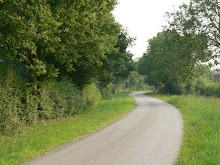
At North Acre, turning down the icy Laytham lane, one flies right across the path of the range rover, and then we follow it, at its own speed, as it dithers between which ditch to hunt, flitting between each, on either side of the lane. We are fascinated by the ridiculously undynamic features. Aerodynamics were not high on the list when the barn owl got made. Listening was. Its great dish shaped face makes it look as though it is flying backwards. But I have heard it said that that huge dish facilitates an auditory ability which can hear a shrew move in grass a kilometre away. Barn owls don't see well, but their hearing is extraordinary.
Owls traditionally have been, for no good reason, emblematic of wisdom, and this would also be a fine allusion for the coat of arms. Perhaps the association derives from extraordinary hearing. For the simple act of listening, just listening, doing nothing other than listening, seems so elusive, so difficult that having a symbolic reminder on the coat of arms to deploy it, can only do good. Were it possible at all, it would be worthier than most causes for honour. I would earnestly treasure recognition for services to listening. I've never met anyone who doesn't, on a level greater than they have received, wish to be heard. It seems almost a trivial gift, yet when I think of my own life, to have been heard, completely heard, fully heard, has been amongst the highest of honours. And those few who have listened. Ah. In my eyes, nobility indeed.
Thursday, 24 January 2013

Monday, 21 January 2013
Friday, 18 January 2013
Thursday, 17 January 2013
MINUS EIGHT
It isn't just snow.
With the temperature down to minus eight, all the moisture caught on the tiny branches of trees solidifies as rime. Thus the oaks along the Seaton Ross lane appear to cross-dress. How you sex an oak tree is beyond me but there is something intrinsically masculine about these oaks normally. With their straight trunks and long main limbs, they stand as straight as ratings on parade and they look destined for the navy, as keel boards and planking, as indeed was once their use. Trees with which you would happily go into battle. Now, though, they are draped in lace, like giant cowslips. Their more sensitive side becomes visible, delineated in white. It is a rare pleasure to see it. It generally just isn't that cold.
At the double bend at Fosses Farm, Fieldfares gather, all along the north edge of the field. As they fly away from you with fast wing beats they look like puffins (which are surprisingly small birds). But you know they can't be. And their blueish heads, just a purple mist as they fly off, give them away. These will be winter visitors here, from very northern parts - Latvia, the Baltic, Russia and so on. It is difficult to understand why they are just in that tiny micro locality. Dare one say, they are there without rime or reason? It must I guess be some berry or other attracting them. It has its secrets. I once found an old tap there. But no water came from it. Whatever this secret, there they party around their discovered food source. Forty or fifty of them. All in their blue balaclavas. Russian emigres. Ex mariners, from an oak planked Baltic fleet?
Wednesday, 16 January 2013
INTERESTING RESEARCH
Differences in Frequency of Violence and Reported Injury Between Relationships With Reciprocal and Nonreciprocal Intimate Partner Violence
Daniel J. Whitaker, PhD, Tadesse Haileyesus, MS, Monica Swahn, PhD, and Linda S. Saltzman, PhD
At the time of this study, Daniel J. Whitaker and Linda S. Saltzman were with the Division of Violence Prevention, National Center for Injury Prevention and Control, Centers for Disease Control and Prevention, Atlanta, Ga. Tadesse Haileyesus is with the Office of Statistics and Programming, National Center for Injury Prevention and Control. Monica Swahn is with the Office on Smoking and Health, Centers for Disease Control and Prevention.
Peer Reviewed
Contributors D. J. Whitaker designed the research, conducted analyses, and was responsible for writing the article. T. Haileyesus was responsible for conducting the analyses. All authors contributed to the design of the research and to the writing of the article.
ABSTRACT
Objectives.
We sought to examine the prevalence of reciprocal (i.e., perpetrated by both partners) and nonreciprocal intimate partner violence and to determine whether reciprocity is related to violence frequency and injury.
Methods.
We analyzed data on young US adults aged 18 to 28 years from the 2001 National Longitudinal Study of Adolescent Health, which contained information about partner violence and injury reported by 11 370 respondents on 18761 heterosexual relationships.
Results.
Almost 24% of all relationships had some violence, and half (49.7%) of those were reciprocally violent. In nonreciprocally violent relationships, women were the perpetrators in more than 70% of the cases. Reciprocity was associated with more frequent violence among women (adjusted odds ratio [AOR]=2.3; 95% confidence interval [CI]=1.9, 2.8), but not men (AOR=1.26; 95% CI=0.9, 1.7). Regarding injury, men were more likely to inflict injury than were women (AOR=1.3; 95% CI=1.1, 1.5), and reciprocal intimate partner violence was associated with greater injury than was nonreciprocal intimate partner violence regardless of the gender of the perpetrator (AOR=4.4; 95% CI=3.6, 5.5).
Conclusions.
The context of the violence (reciprocal vs nonreciprocal) is a strong predictor of reported injury. Prevention approaches that address the escalation of partner violence may be needed to address reciprocal violence. Read More: http://ajph.aphapublications.org/doi/abs/10.2105/AJPH.2005.079020
Tuesday, 8 January 2013

Sunday, 30 December 2012

Wednesday, 19 December 2012

Friday, 7 December 2012
SWANNING
The two swans have it good. They are together, gently necking on the rippling ponds. They occasionally peck down for a snack. They are well wrapped up against the cold.
And it's all free.
When they want some nourishment, they just find it and take it from the bounty of the good earth.
Their needs are relatively few. They don't use money. or credit cards. They have no economy at all.
These are simple creatures. Not evolved, highly developed, as we are. With our money worries. Our gadgets. Our notions that you have to work for a living.Our strange barriers, erected by our proud sophistication, between us and the world.
And our sense of puzzlement, at why this increasing sophistication seems to make us no happier.
Friday, 30 November 2012
STUCK
“We’re stuck,” he said, “stuck in our ways, stuck in our inability to provide a wider vision of what our service to the organization and our customers could and should be.”
Now that was a brief I could work with. We took the team to an extremely remote shooting lodge. To get there, 4x4s were needed. They hired theirs. We took ours. After an apparently normal dinner, overnight stay and breakfast, unfortunately our clumsiest consultant got the 4x4 stuck to its axles in a notorious bog, just off one end of the landrover track. Why did he ever go in there?
The call for help came in at the shooting lodge, and it was all hands to the pump, or, in this case, shovels, tow ropes, winches etc. For a good few hours, the team laboured to release the vehicle. They were up to their knees, and sometimes deeper in the mud, struggling to get the vehicle out, oblivious to the metaphor being worked on them.
But in session afterwards, receiving feedback from the rest of the business on being “stuck in the mud” as a team, together with video and observational feedback of their physical labours led them to reflect on their own behaviours at their best and at their worst.
To this day, the client says he cannot work out whether we deliberately got that vehicle stuck, or not! There was a sequel.
One group member, who had spent a childhood in the countryside, said “you won’t get that out. You need a tractor.” He was right. But the group didn’t see it that way. They saw their mission as trying to get the thing out, as distinct from getting it out. That he would not join in what he saw as futile labours left him isolated. Some months later. I revisited the team, more cohesive than ever. The lone voice was no longer employed within it.
Thursday, 29 November 2012
Tuesday, 13 November 2012
WHERE THE BUCK STOPS
It was a very large office. Cream carpet, measured by the hectare. Impressive negative space of a desk. The man himself, the CEO, small, a bit mis-shapen, very quietly spoken with an impediment that he had cunningly developed to make people listen. Not a single paper on the huge desk. Just a small wooden plaque, facing the victim. For one felt like a victim, walking the long distance between door and your bidden place in front of the desk.
"We want to create an empowerment culture," he pronounced, quietly, so quietly you had to strain to hear him, "a culture where people feel empowered to do the right thing, take the right decision, make the right call. A culture where people are encouraged to take initiative, come up with good ideas. A culture where people are not asking permission all the time, which gets away from our old rule bound ways of doing things and fosters innovation. A culture empowering every employee to make the best of themselves and develop their ideas to mutual benefit. A culture where people don't wait to be told what to do, but get on with doing the right things. A culture which moves beyond command and control, and into, as I say, empowerment."
I was young.
I was awed.
I was listening.
But my brain was not quite lulled into the off mode.
As his body language signalled that the interview was at a close, and I was to leave, I said "sounds like a fascinating challenge." I almost added the word "sir", such was his developed aura of power.
And then, young as I was, it could not be resisted. I reached forward and turned the small wooden plaque around, so its message faced him, rather than me.
It said, simply:
Subscribe to:
Posts (Atom)